Research
Recognition and Registration Issues in Central Europe
– Analysis of Key Issues in Austria, Czech Republic, Hungary and Slovakia
Central Europe Forum for Freedom of Religion or
Belief Event – 16 February 2026
Dr Brandon Reece Taylorian
Research Fellow at the University of Lancashire
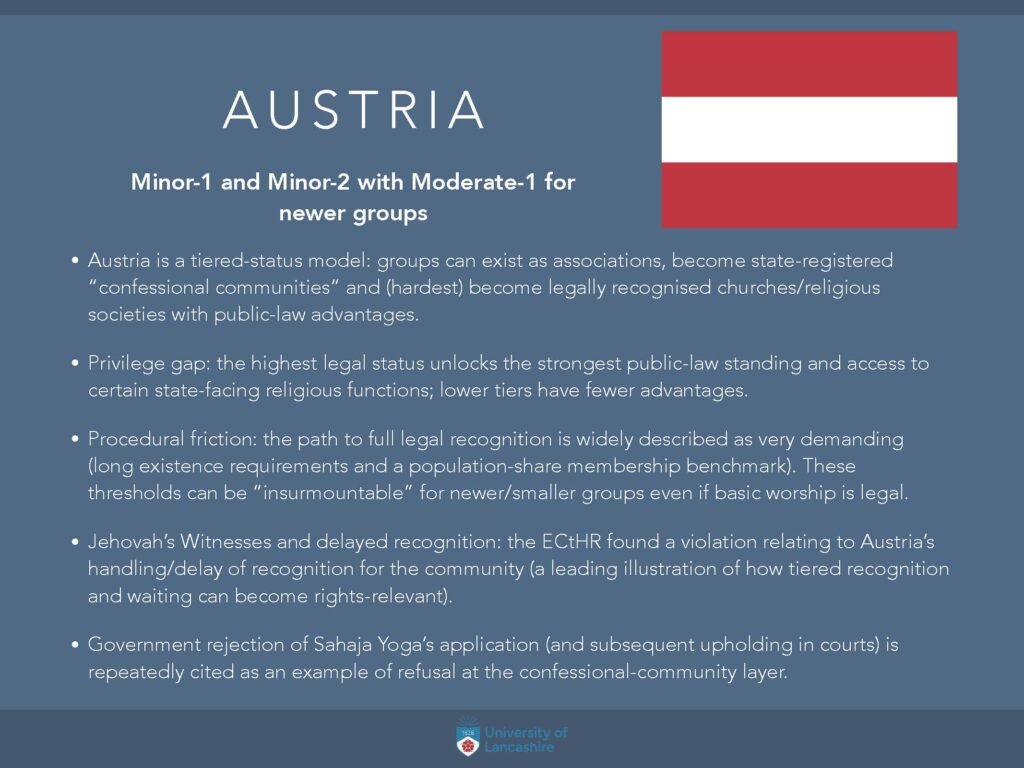
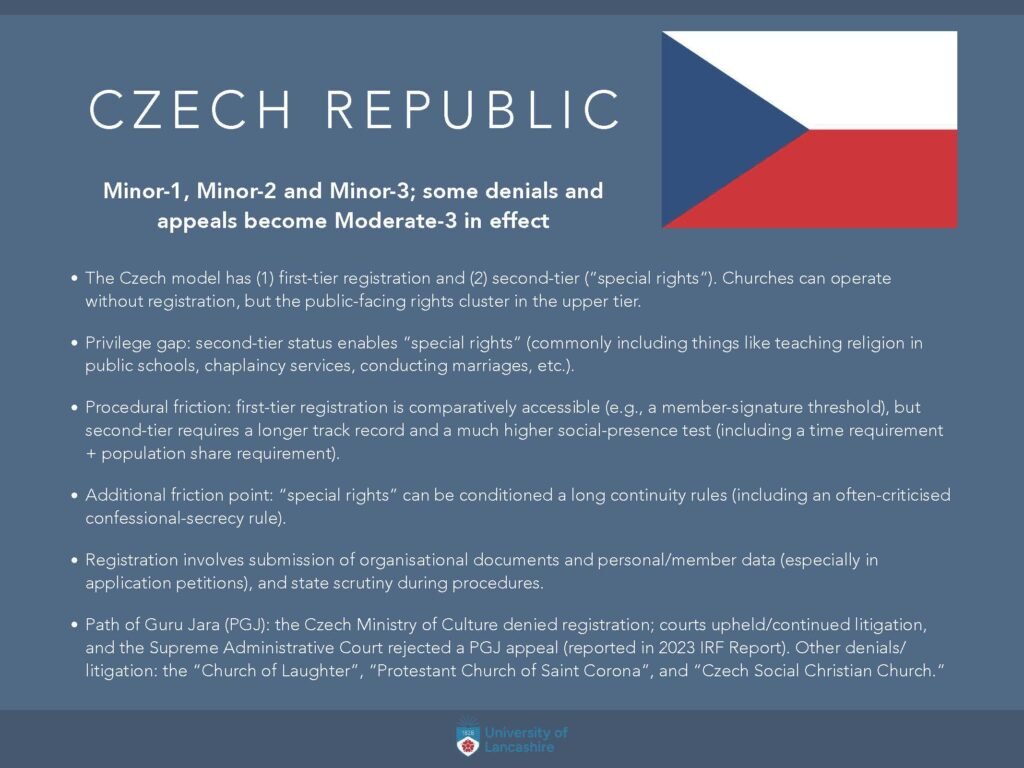
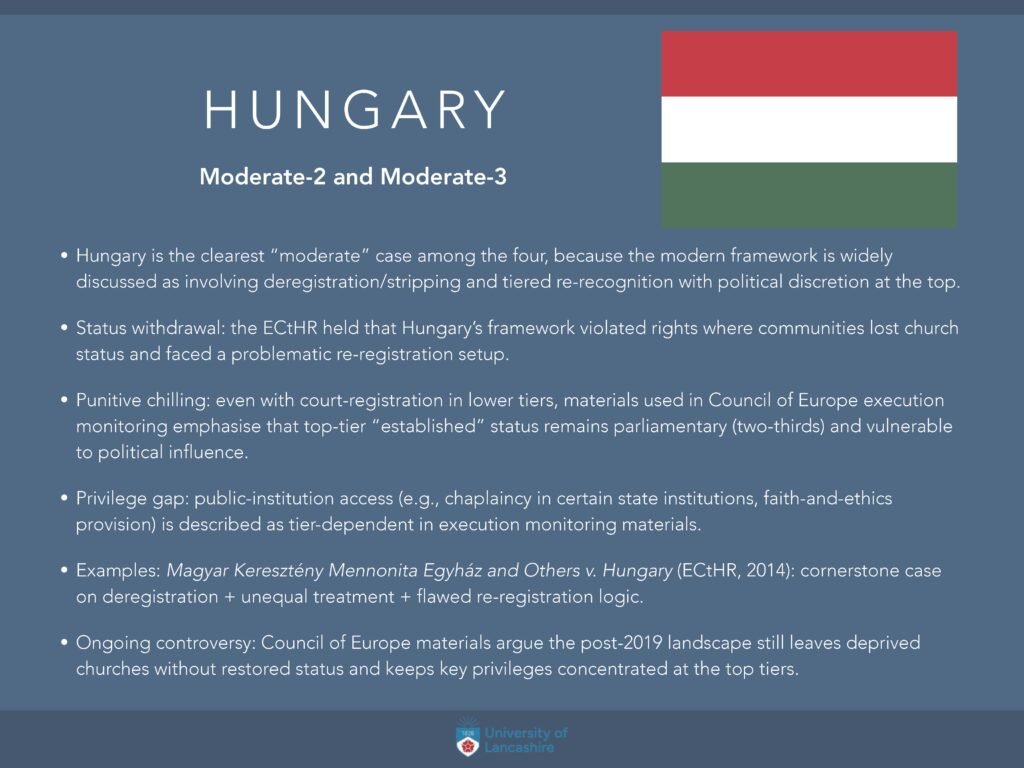
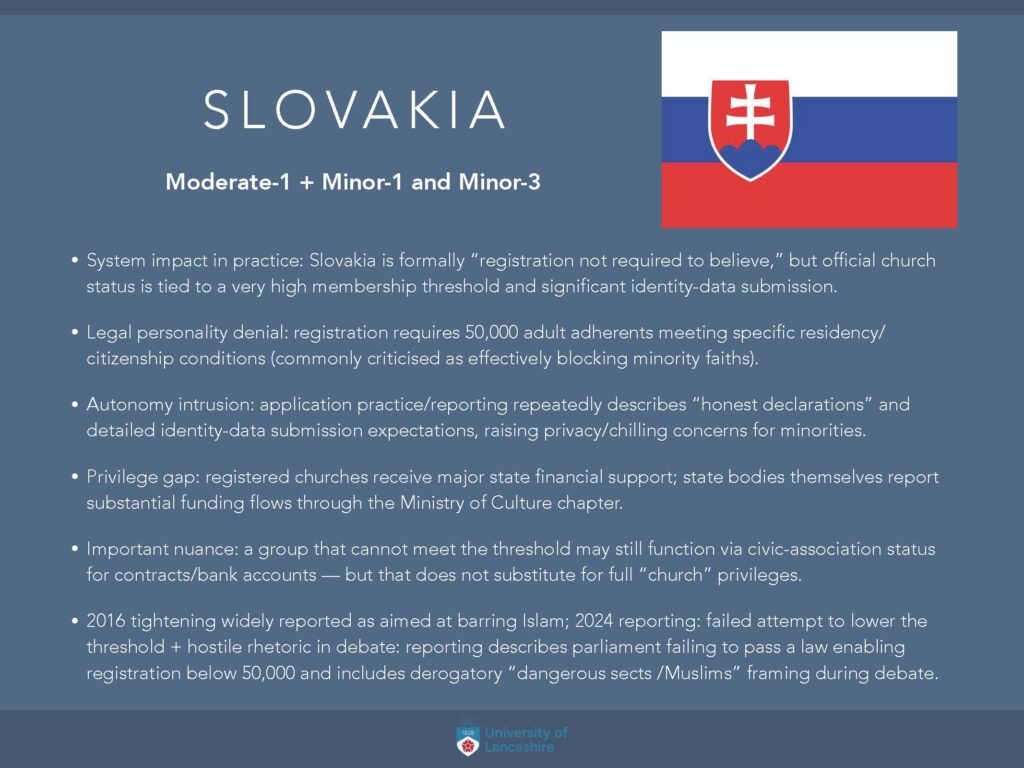
This presentation, “Recognition & Registration Issues in Central Europe: Analysis of Key Issues in Austria, Czech Republic, Hungary and Slovakia,” was delivered at the Central Europe Forum for Freedom of Religion or Belief (16 February 2026) and explains how different legal models of registration and recognition shape the practical freedom of religious communities across the region. It compares four national systems—Austria’s layered hierarchy, the Czech Republic’s two-tier model of “basic” versus “special” rights, Hungary’s stratified framework tied to state cooperation and funding, and Slovakia’s exceptionally high threshold that can make registration functionally unattainable—showing how these structures create unequal access to legal personality, public benefits, and institutional participation. The talk closes with principles for an “ideal” registration system (clarity, speed, non-discrimination, and avoiding rigid hierarchies) and introduces a collaboration with InterBelief Relief to pilot a survey that captures community experiences across pre-registration, registration, and post-registration stages.
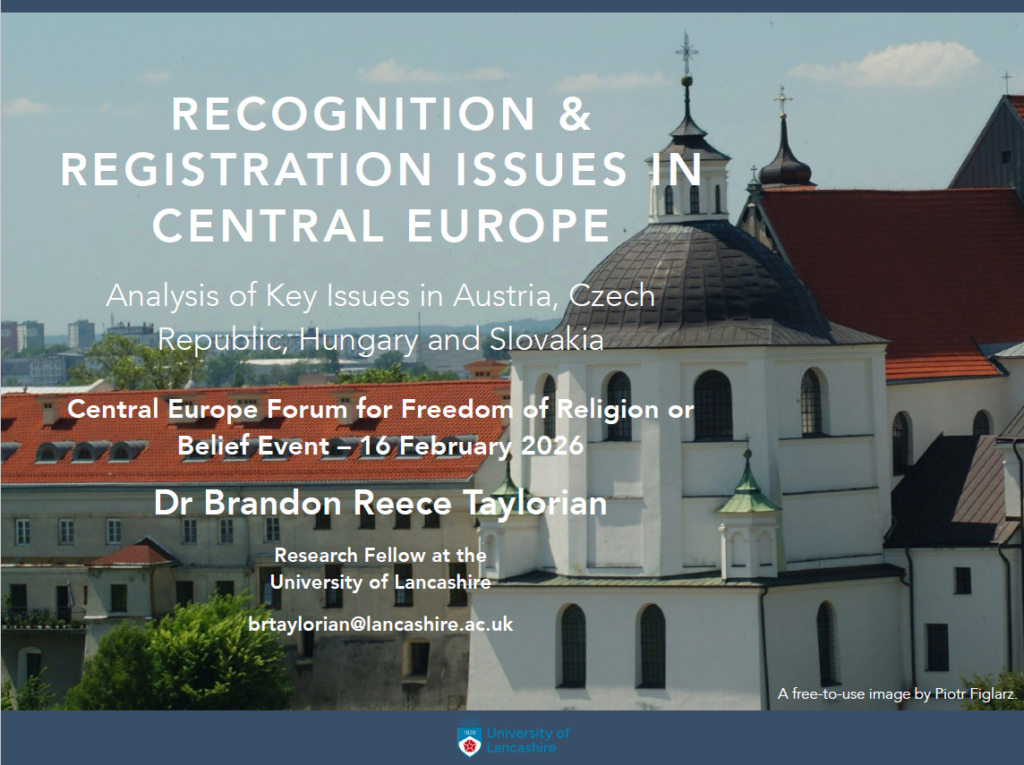
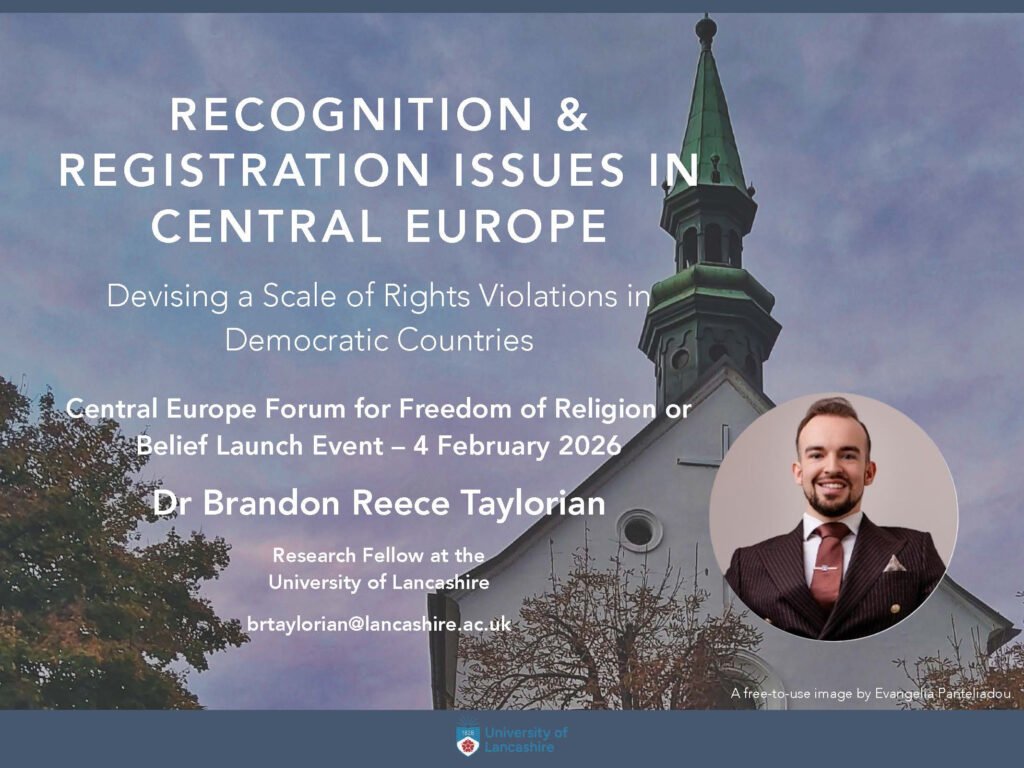
RECOGNITION & REGISTRATION ISSUES IN CENTRAL EUROPE
Devising a Scale of Rights Violations in Democratic Countries
Central Europe Forum for Freedom of Religion or Belief Launch Event – 4 February 2026
Research Fellow at the University of Lancashire
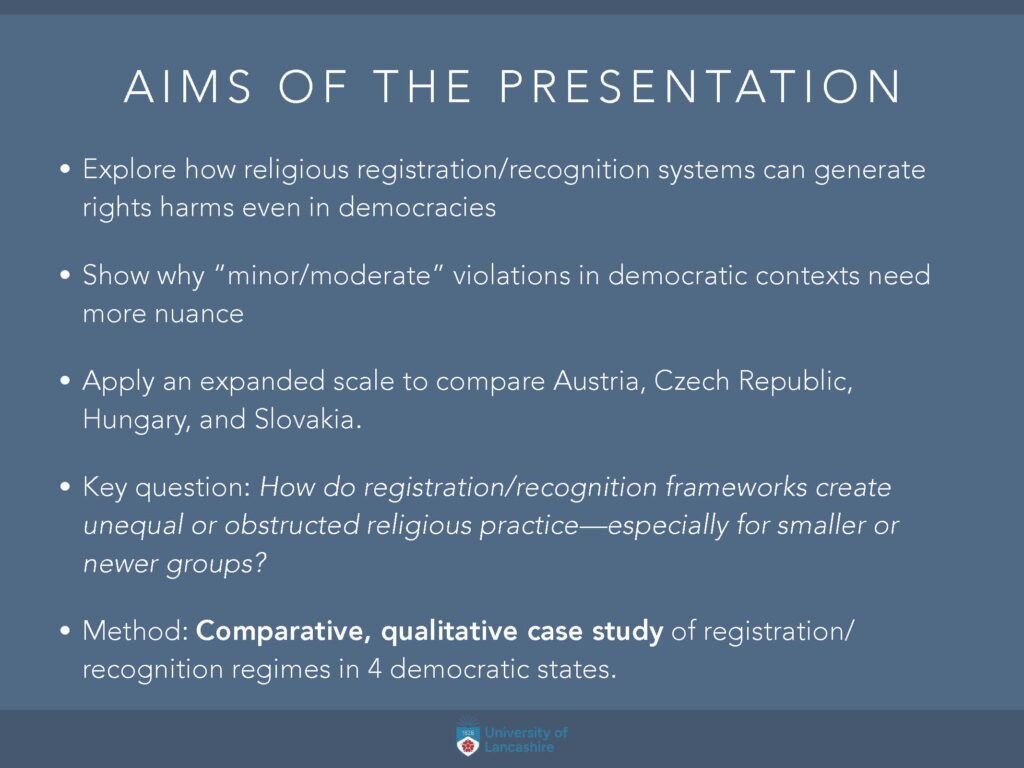
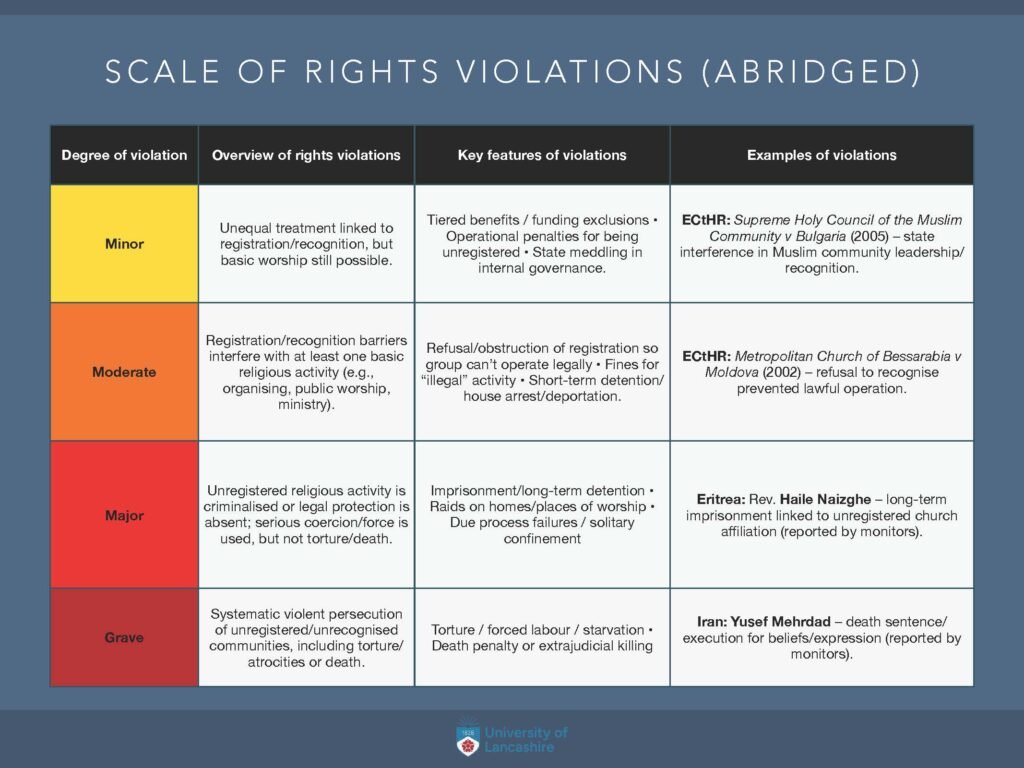
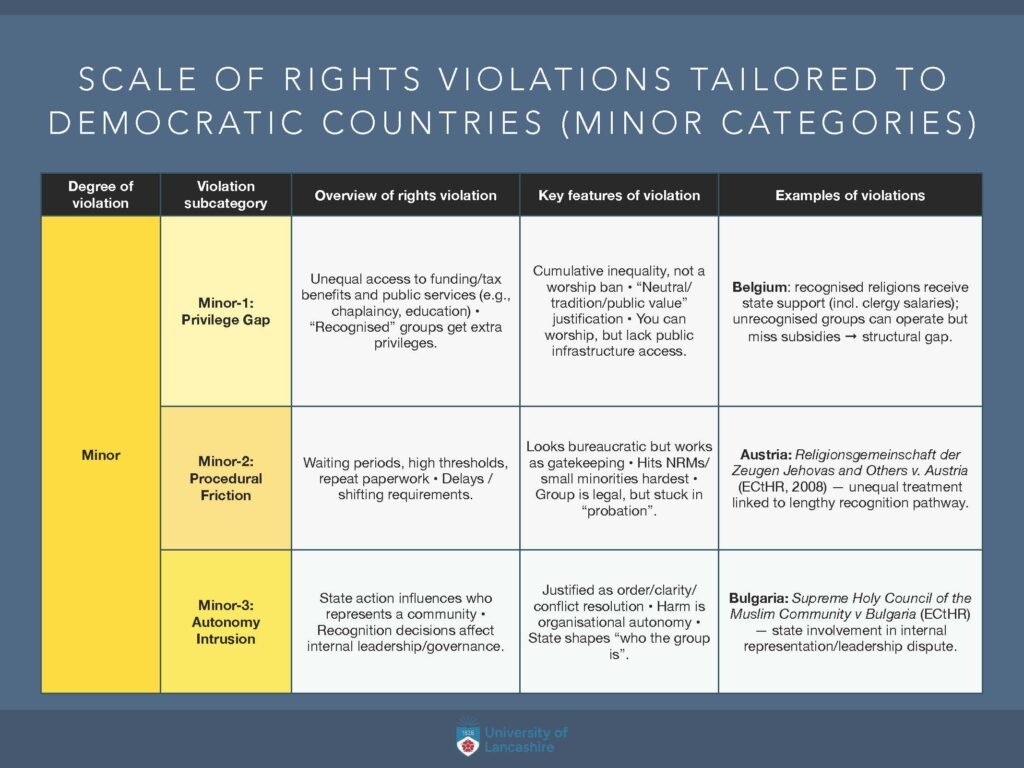
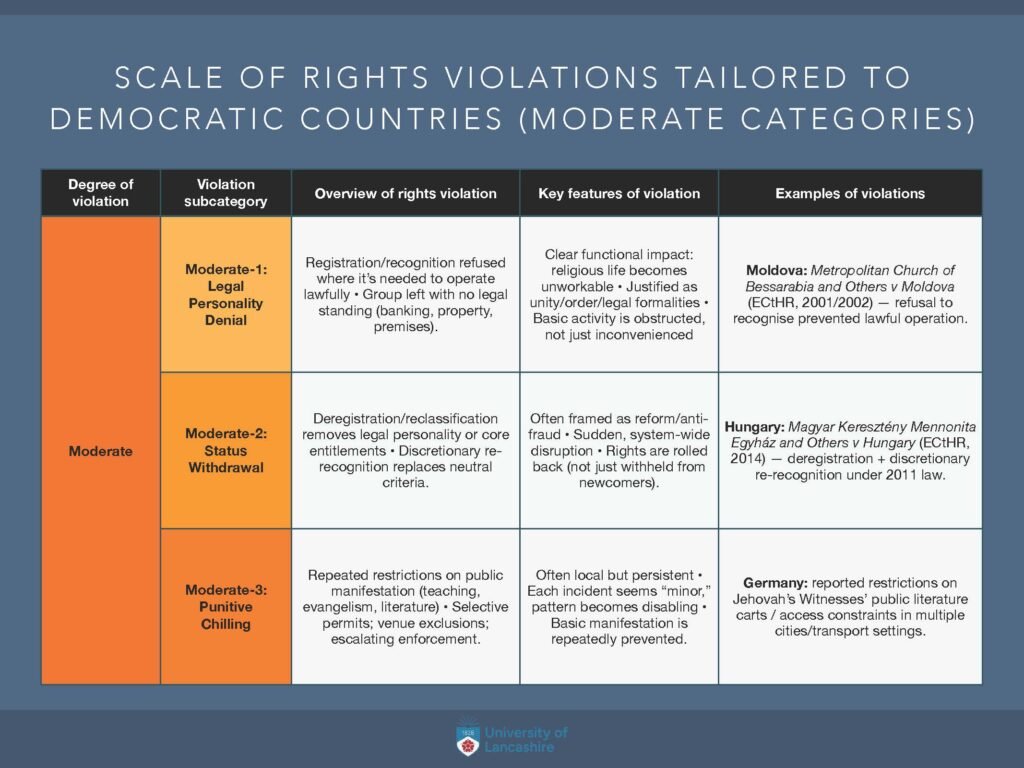
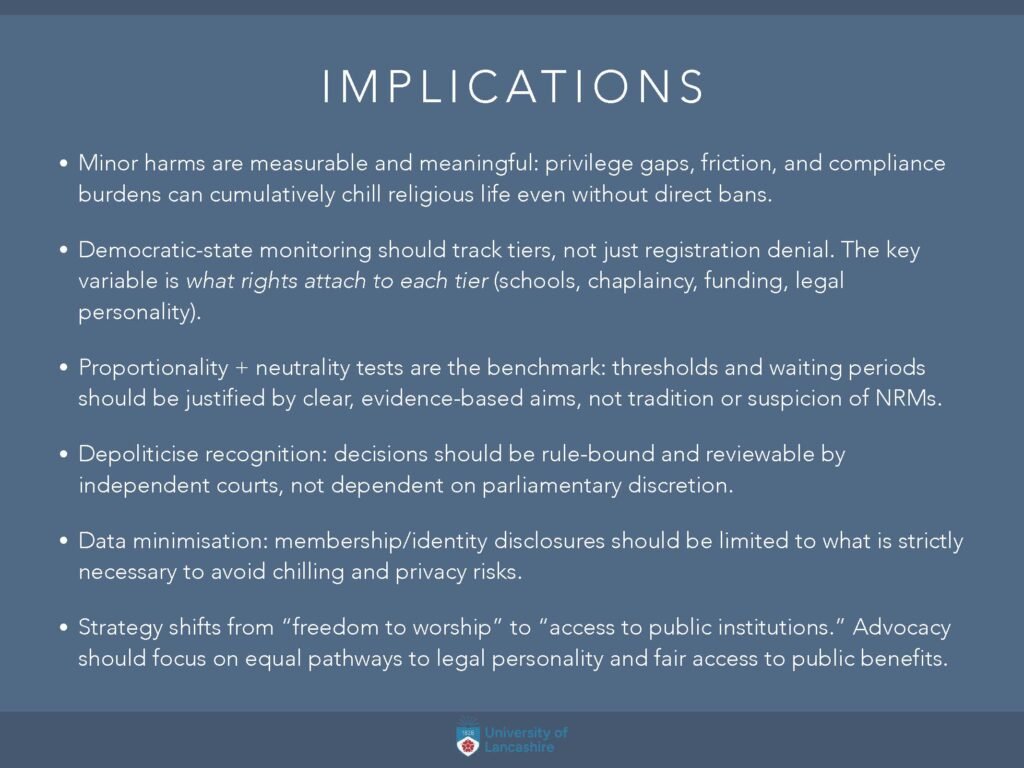
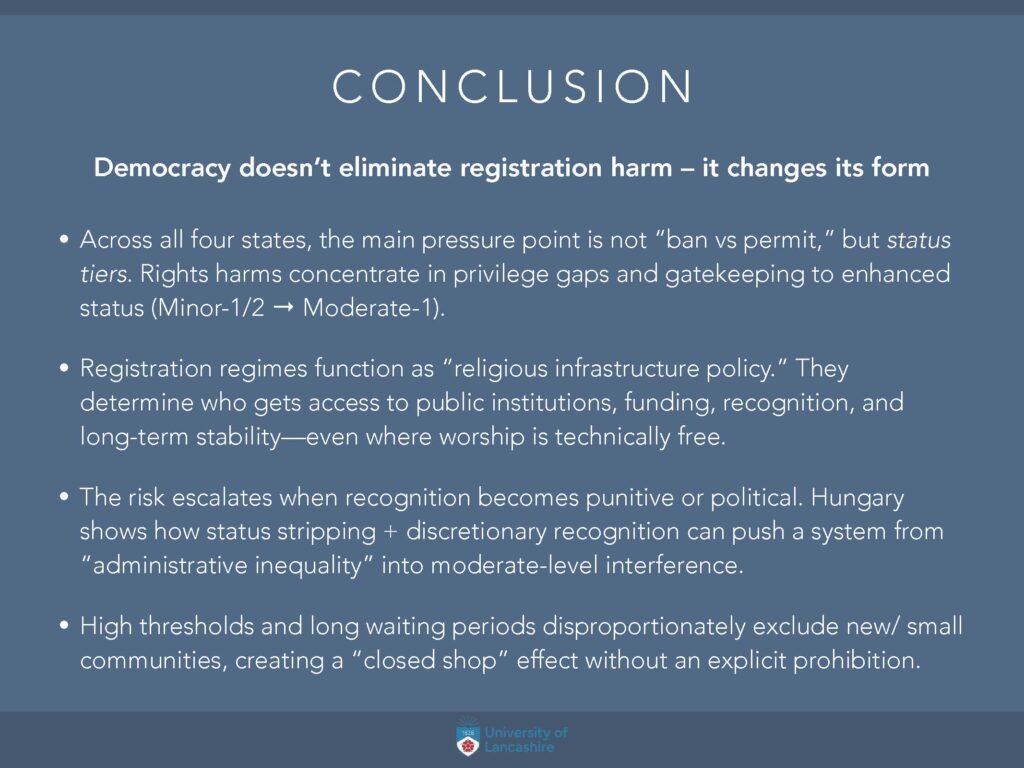
These slides, “Recognition & Registration Issues in Central Europe: Devising a Scale of Rights Violations in Democratic Countries,” were prepared for the Central Europe Forum for Freedom of Religion or Belief launch event (4 February 2026) and set out a framework for identifying and comparing how registration/recognition regimes can generate rights harms even in democratic states. The presentation introduces an abridged scale of violations (minor to grave) and then tailors it to democratic contexts through specific sub-categories—such as “privilege gaps,” “procedural friction,” and “autonomy intrusion,” as well as more serious forms like legal personality denial and status withdrawal—before applying the framework comparatively to Austria, the Czech Republic, Hungary, and Slovakia. It concludes with practical implications for monitoring and advocacy, arguing that the core pressure point is often not “ban vs permit” but status tiers and unequal access to public institutions, funding, and legal stability.